Visionaries in the Shadows
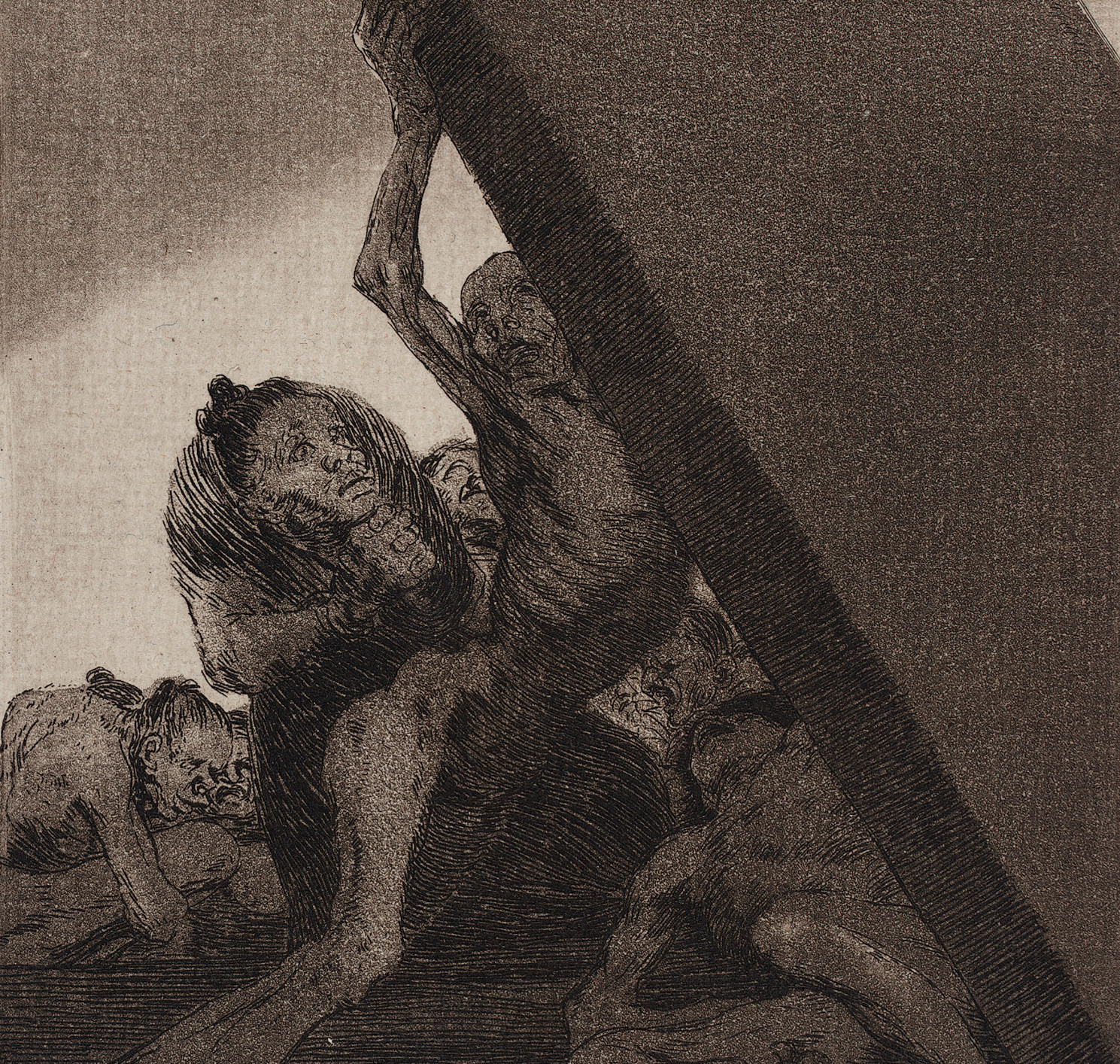 Francisco Goya, And still they don't go! (Y aun no se van!), plate 59 from Los Caprichos, 1799, etching, burnished aquatint, burin. Museum of Fine Arts, Boston, gift of Miss Katherine Eliot Bullard, 14.1785
Francisco Goya (1746–1828) was a major touchstone for French printmakers exploring dark, supernatural subject matter. His set of eighty Caprichos (published in 1799) offered a raw, modern vision of humankind existing in a state of disquiet, bewildered by an unfathomable universe.
In addition, Goya’s use of aquatint, a tonal method, in combination with etching revolutionized printmaking and left an enduring legacy. Taking cues from art as well as literature, French Romantic printmakers such as Eugène Delacroix made works that hinted at the mysterious forces beyond the visible.
The writer Victor Hugo observed in the 1820s that “in things there are more than things,” and that “it’s only when the physical world has completely disappeared from [one’s] eyes that the ideal world can be manifested.” This emphasis on the incomplete nature of visible reality would profoundly influence the Shadow Visionaries of the mid-century.