Spaces of Dreams
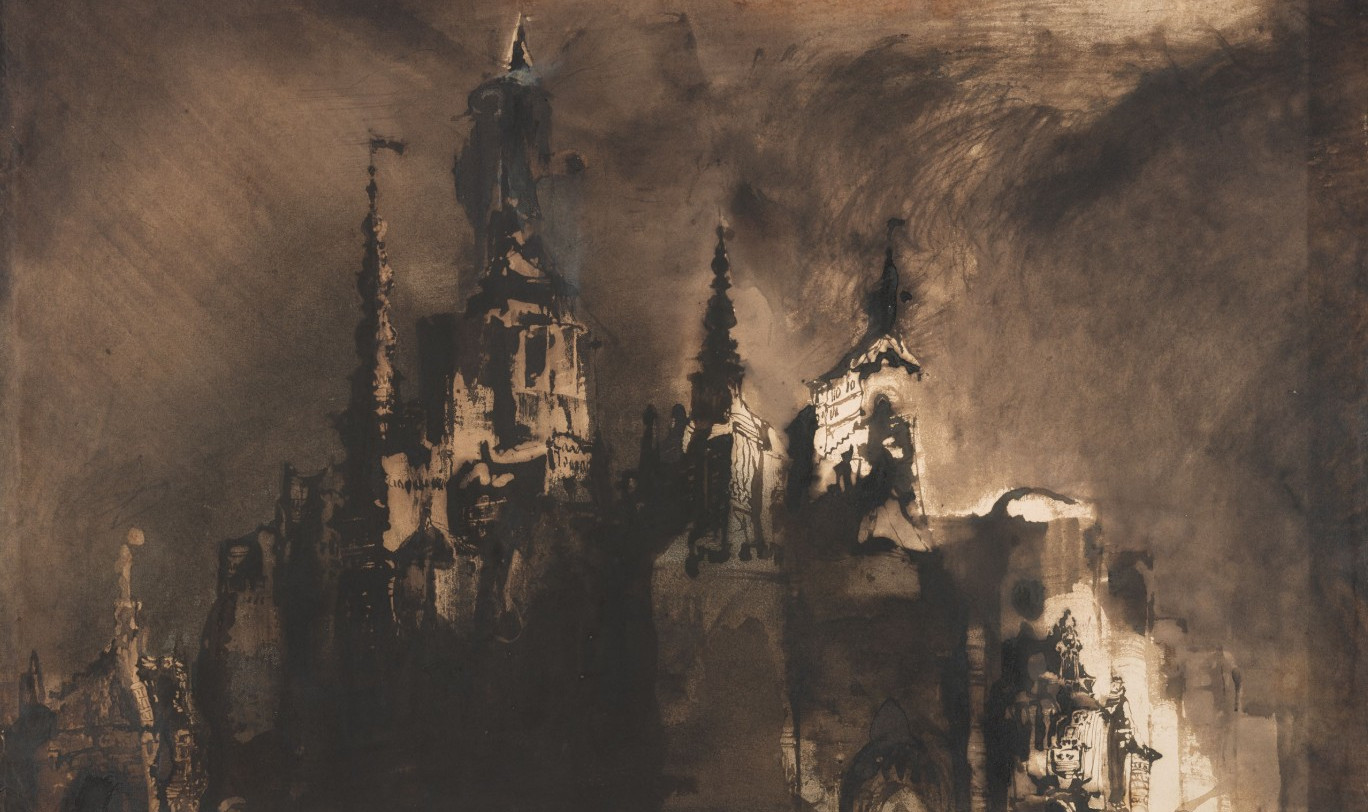 Victor Hugo, Fantastic Castle at Twilight, 1857, pen and brush and brown and black ink, with stamp, heightened with touches of white gouache, on cream paper, partly rubbed. Morgan Library & Museum, Thaw Collection, 2010.115
For artists dissatisfied with the status quo in any era, imagining new or alternative worlds has always offered an escape. The mid-nineteenth century in France was no different.
Victor Hugo, an artist and writer, spent nearly two decades in exile, while other Shadow Visionaries pursued dreams of “elsewhere” from within France.
Between fall 1853 and summer 1855, during his residence on the island of Jersey, Hugo engaged in regular séances, using a medium to communicate with the spirit world.
This impulse to bridge the gap between the dead and the living echoes the burgeoning genre of science fiction’s desire to link known and unknown worlds through supernatural leaps of imagination. Book illustrations in this genre show how art and literature mutually inspired the quest to envision otherworldly realms.