Underground
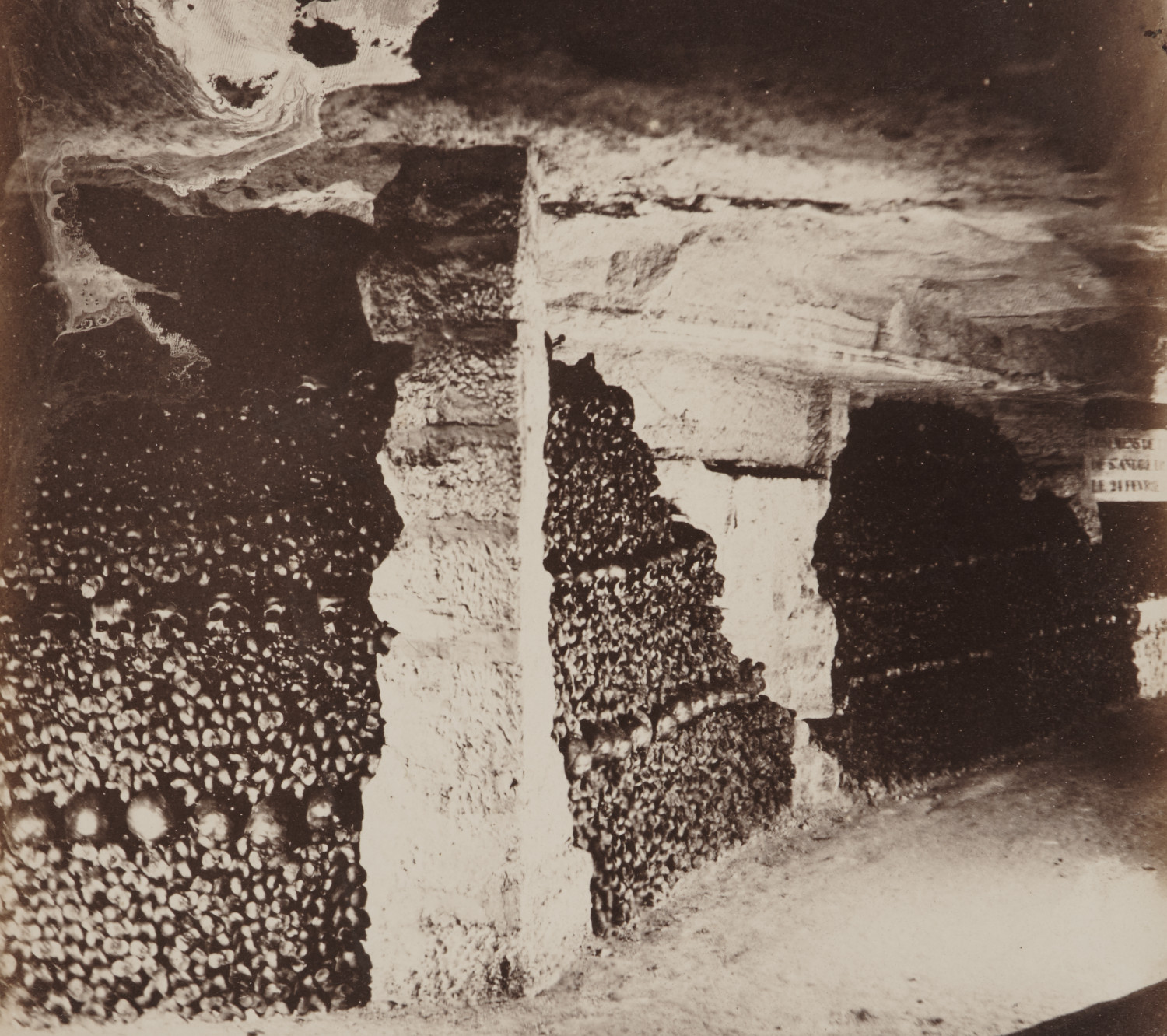 Nadar (Gaspard Félix Tournachon), Catacombs of Paris: "Hallucinations of shadow, light and collodion" Facade no. 3, 1862, albumen print. The Clark, 2024.8.1
The splendid avenues, boulevards, and shining new façades of Baron Haussmann’s Paris necessitated the destruction of many existing structures—sometimes entire neighborhoods. By one count, twenty thousand buildings were torn down for thirty thousand new ones erected.
Quarries on the edges of the city furnished building materials for dramatic transformation closer to the center. Changes to the urban fabric did not occur just on the surface: creepy belowground sites like catacombs and sewers also figured on the city planners’ agenda for renovation.
Printmakers and photographers alike took peculiar inspiration from these hostile, barren, noxious places, perhaps finding in them literal expressions of the “underside” of urban progress.
That subterranean locales could be photographed at all was a feat of technology by artificial light that Nadar helped to patent. In addition to the ecological costs of urban upheaval, the digging up of ground layers occasionally unearthed macabre surprises, surfacing as long-buried echoes from the past.