Hope and Despair for Society
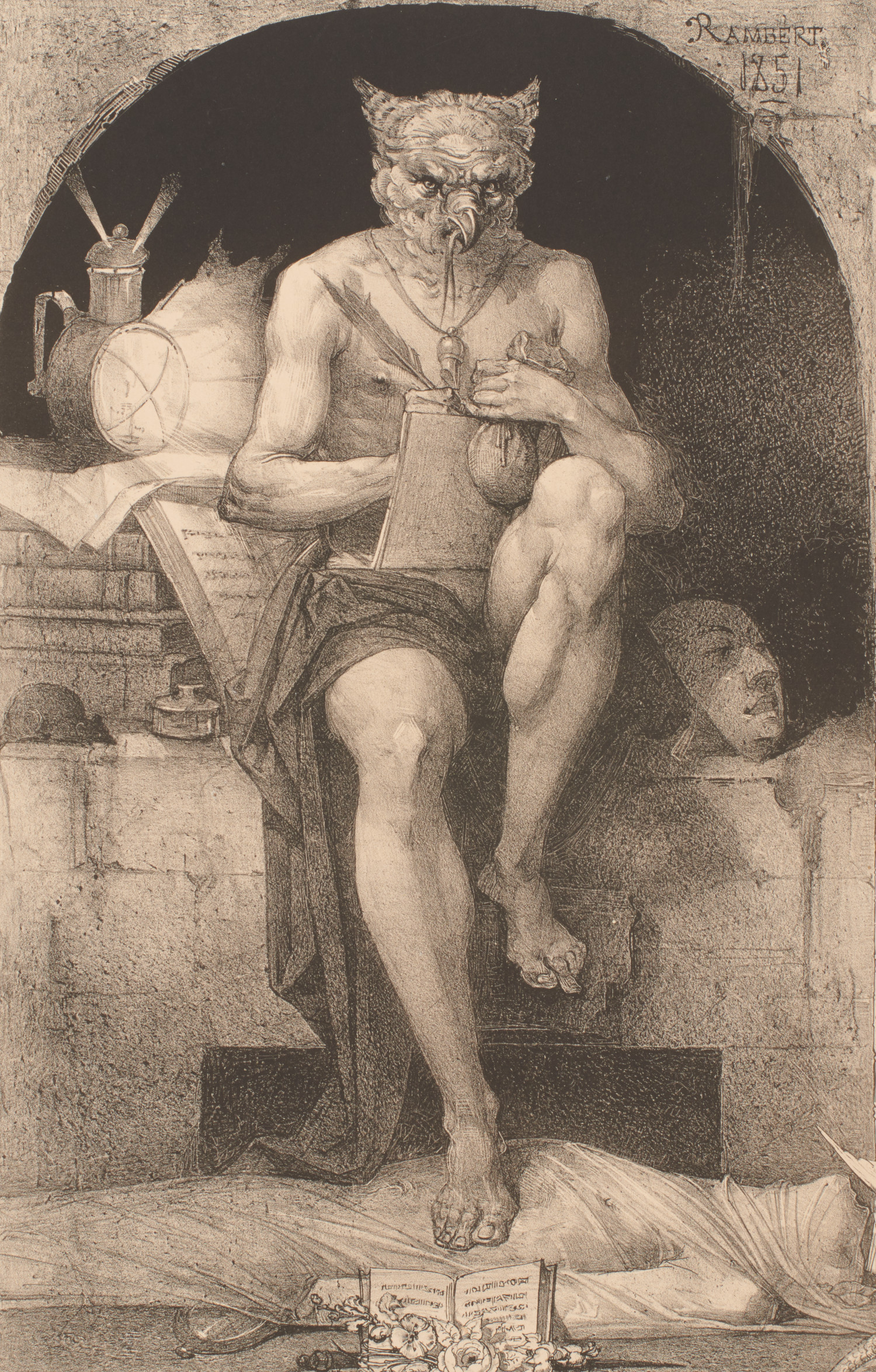 Charles Rambert, The Slanderer (Le Calomniateur), 1851, lithograph. The Clark, 2022.13.3
Although a drive for social reform is more typically associated with Realist artists of the same time period, the Shadow Visionaries were by no means disconnected from contemporary reality. The main difference was that, rather than depicting the world’s woes in literal terms, they tended to express them via symbolism or allegory.
Identifying as outsiders, these individuals rejected conventional societal norms and made it their business to confront issues like death, pain, and loss with raw, unsparing directness. Certain Shadow Visionaries lived in conditions of extreme poverty and material suffering.
In addition, several of them suffered mental instability or spiritual crises that, in the most severe cases, led to suicide or the asylum. To the extent they advanced hopes for social change, they voiced these as a critique of the Second Empire’s triumphalist values of industrial progress and material prosperity, pleading instead the causes of pacifism and a morally purifying religious faith.