

Storm and Story
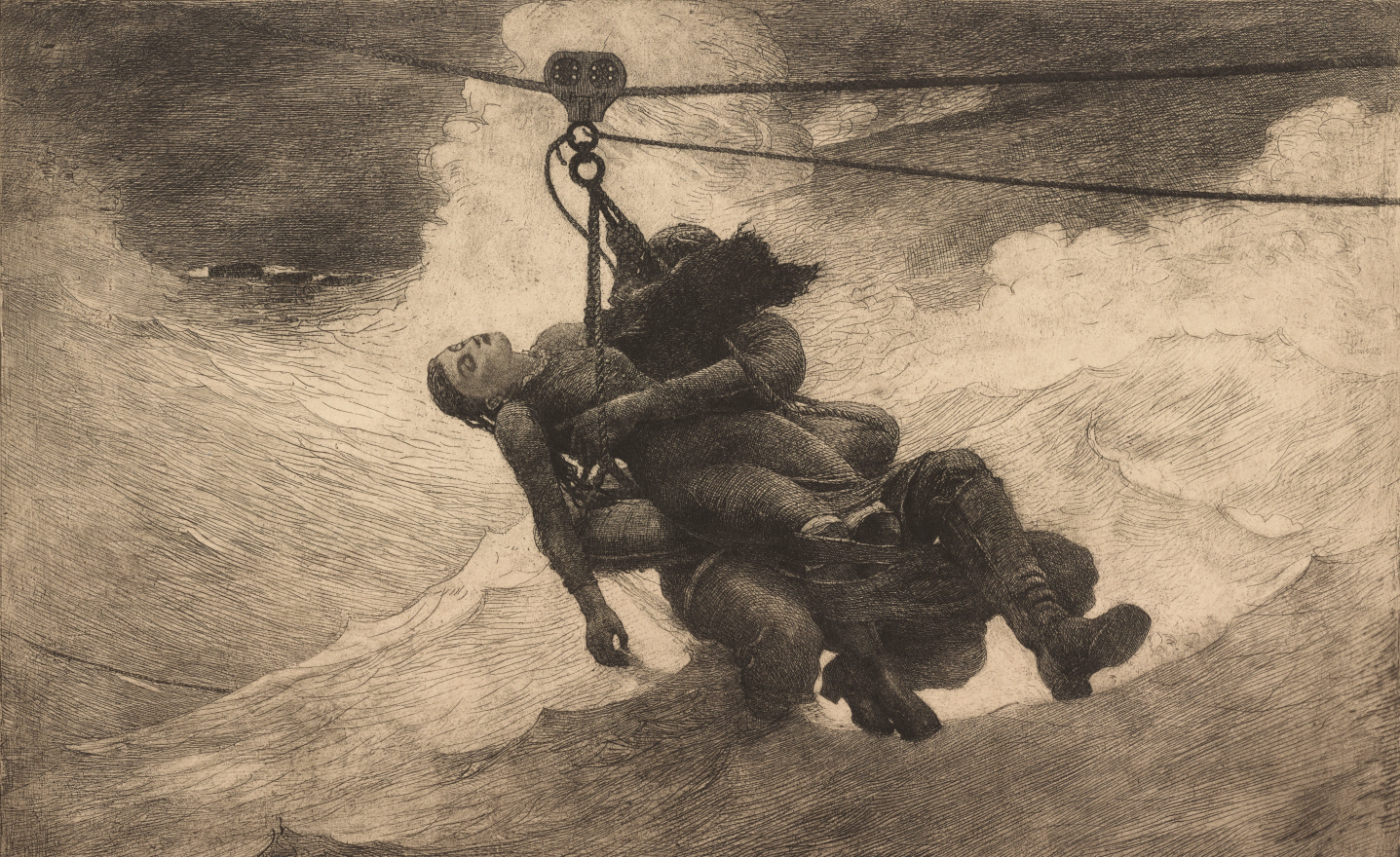
In 1881, Winslow Homer took a trip to England’s North Sea in Cullercoats, where he witnessed the dramatic search and rescue operation following the shipwreck of the Iron Crown. After his stay in England, the artist returned to the East Coast of the United States in search of more sea rescues. He witnessed many upon his return, producing both paintings and illustrations of these tragic scenes.
Homer’s illustrations of shipwrecks were featured in newspapers and periodicals, feeding a growing public appetite for sensational scenes of danger, loss, and survival at sea. The scenes also became the basis for some of Homer’s most revered paintings, like Undertow in gallery one of the Clark’s permanent collection. These painted compositions are reproduced by the artist as the fine art prints shown here, which combine the austerity and drama of traditional history painting with the frank and stalwart figures that defined his American genre scenes.