

Noguchi's Materials
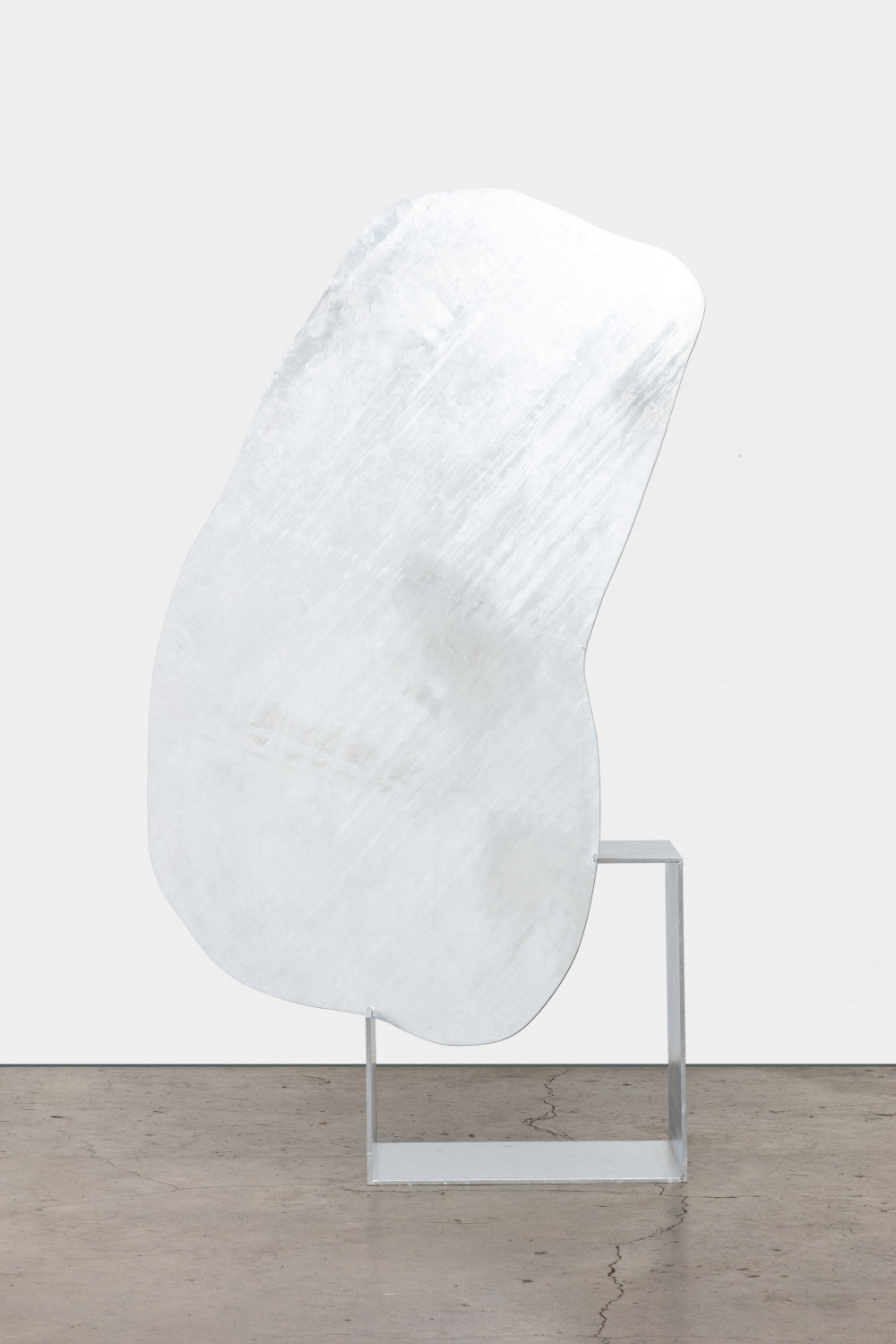
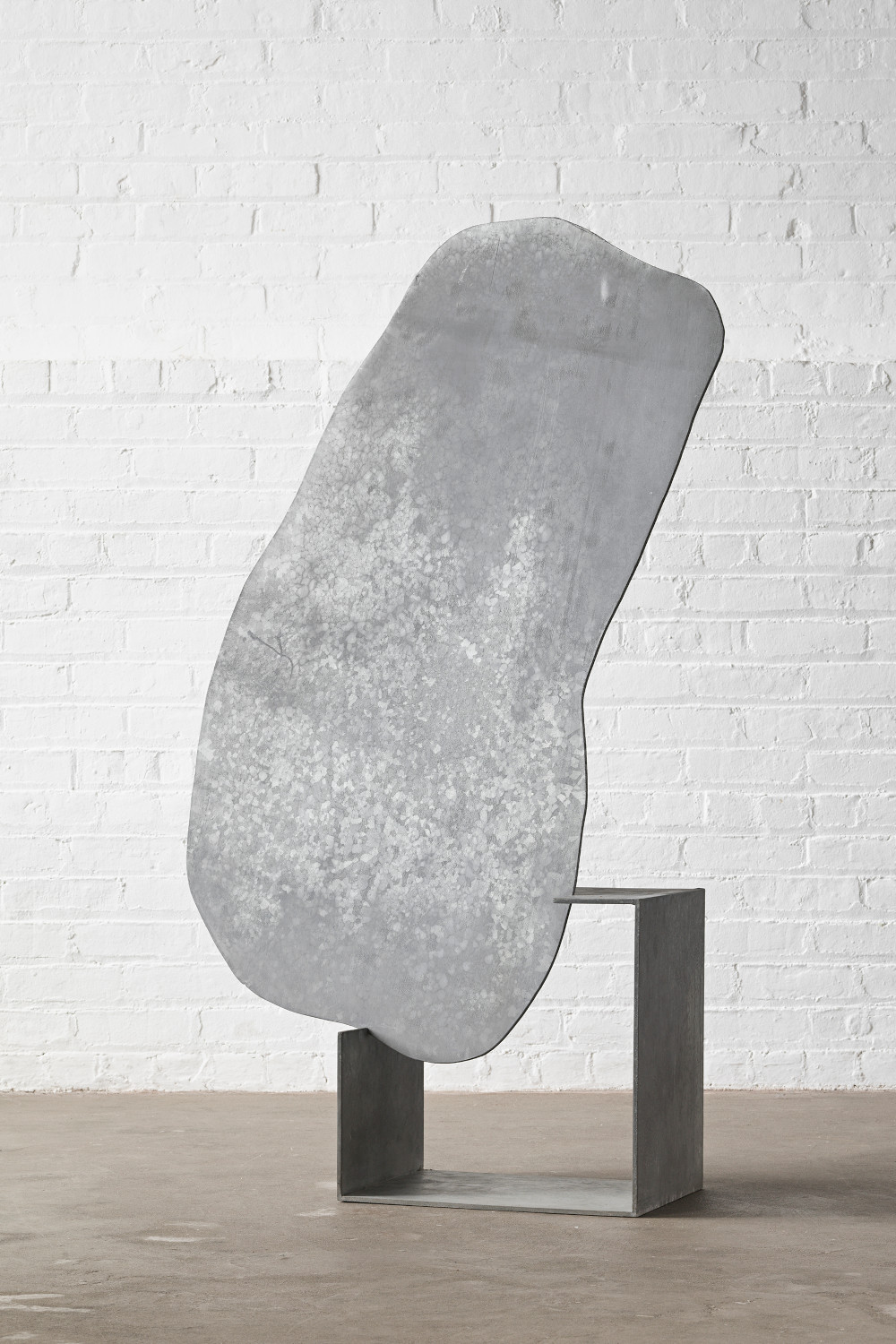
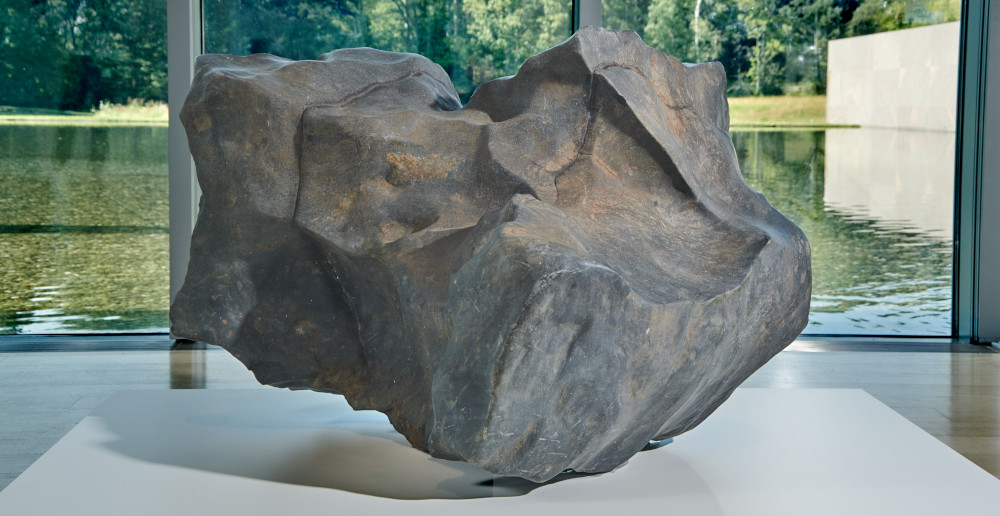
Clockwise from top left: 1) Isamu Noguchi, Magritte's Stone, 1982–83 (fabricated 2023), hot-dipped galvanized steel. The Isamu Noguchi Foundation and Garden Museum, New York, 1038A-F5; 2) Isamu Noguchi, Magritte's Stone, 1982–83, hot-dipped galvanized steel. The Isamu Noguchi Foundation and Garden, Museum, New York, 1038A-ap; 3) Isamu Noguchi, Spin‐off #2 from Sunken Garden, Chase Manhattan Bank Plaza, 1961–64, naturally‐shaped Uji River basalt. The Isamu Noguchi Foundation and Garden Museum, New York, 514‐2, © The Isamu Noguchi Foundation and Garden Museum, New York / Artists Rights Society
Noguchi's sculptures frequently explore the life cycles of natural and industrial materials. Throughout his work Noguchi often mixed stone with steel, regarding this combination as a convergence across time. He explained that while stone embodied “a deeper truth of sculpture, something abiding which is beyond the transience of the day,” metal reflected a “return to the present … the comfort of belonging, and transience.” He believed, however, that when these “opposites come together … [t]hey do not conflict,” as “[s]tone is the depth, metal the mirror.”
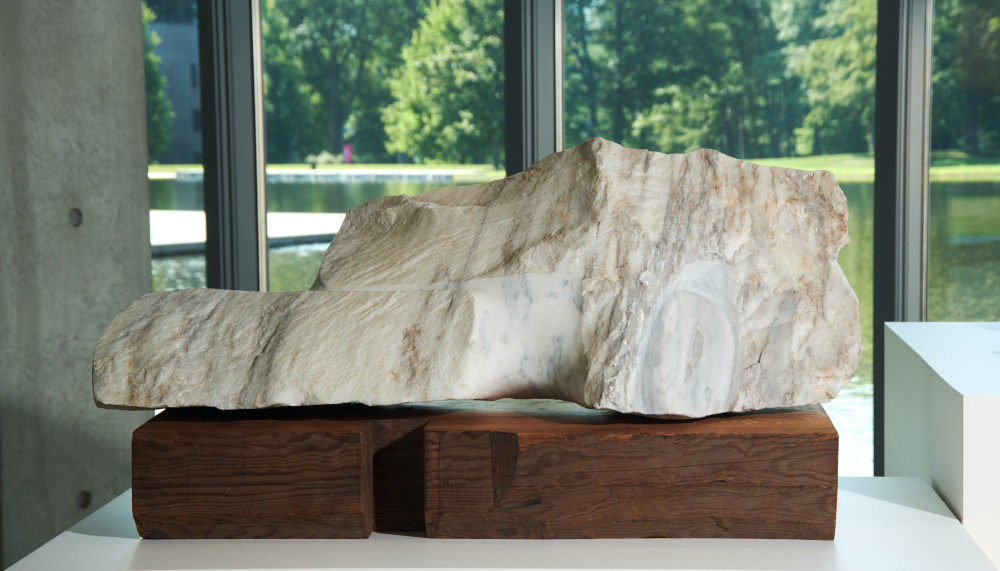
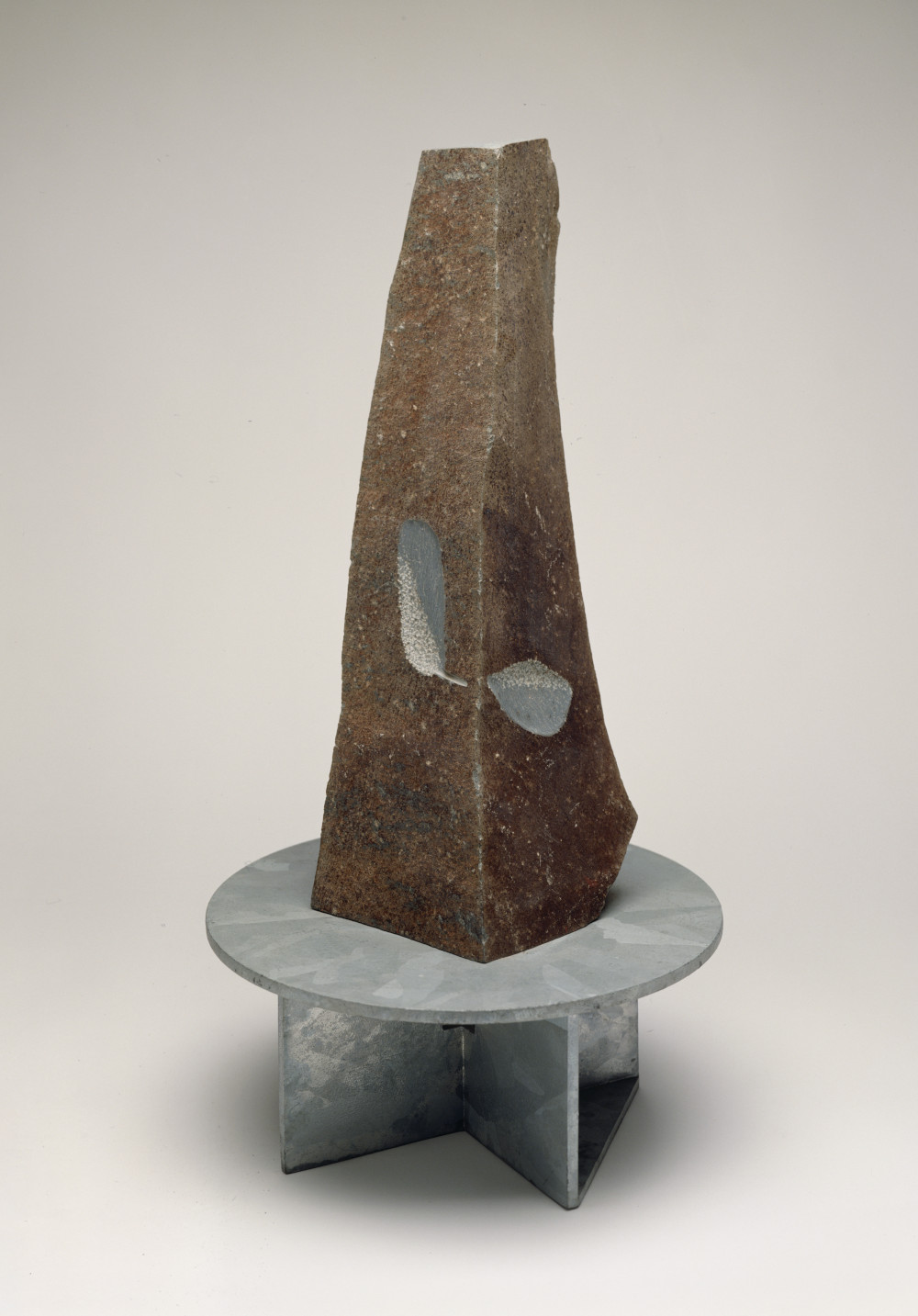
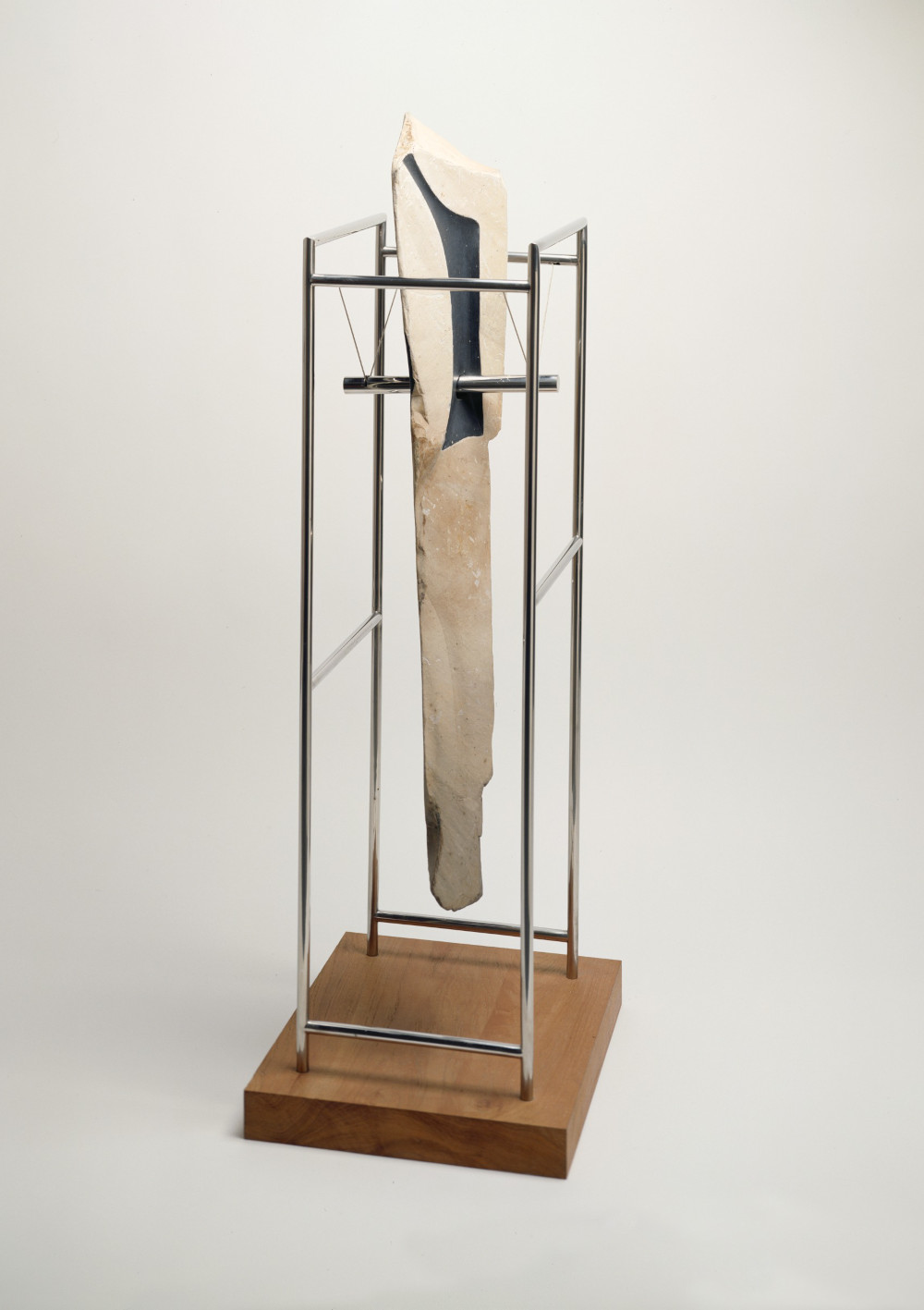
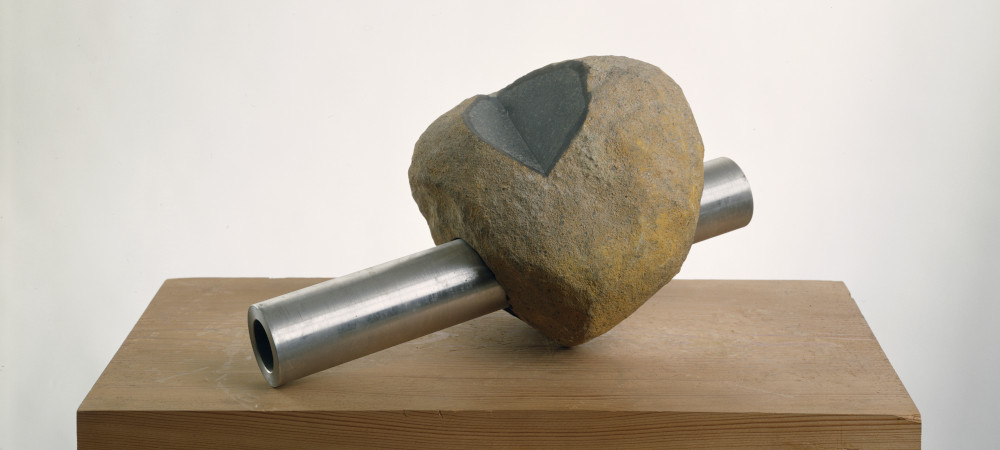
Clockwise from top left: 1) Isamu Noguchi, Asleep in a Rock, c. 1966, marble. The Isamu Noguchi Foundation and Garden Museum, New York, 586; 2) Isamu Noguchi, Untitled, 1981, kan kan ishi (andesite), stainless steel, wire, wood. The Isamu Noguchi Foundation and Garden Museum, New York, 962; 3) Isamu Noguchi, The Primordial Pierced by the Present, 1979, basalt, stainless steel. The Isamu Noguchi Foundation and Garden Museum, New York, 918; 4) Isamu Noguchi, Untitled, 1982, jasper, hot-dipped galvanized steel. The Isamu Noguchi Foundation and Garden Museum, New York, 1013,© The Isamu Noguchi Foundation and Garden Museum, New York / Artists Rights Society