
Highlights
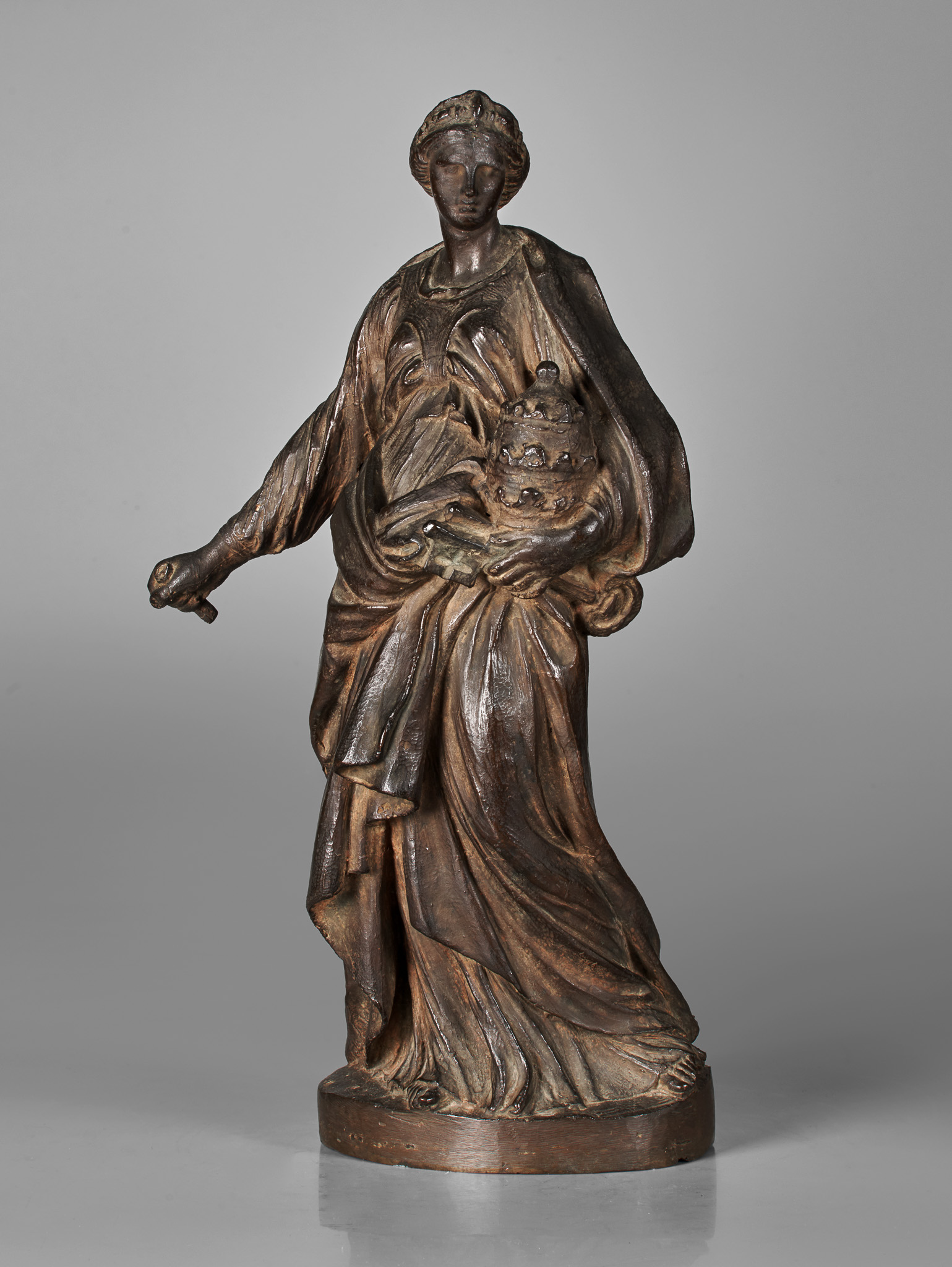
Gian Lorenzo Bernini dominated the production of sculpture in seventeenth-century Rome, bringing the medium to new heights with his artistic and technical virtuosity. While Bernini’s works were predominantly made on a monumental, public scale for papal and princely patrons, this object presents the artist’s expertise in a more personal context.
Bernini’s bronze is a small-scale version of a marble sculpture commissioned by Pope Urban VIII for Saint Peter’s Basilica in 1633. It represents the medieval noblewoman Matilda of Canossa (c. 1046–1115), Countess and ruler of Tuscany, who fought the Holy Roman Empire on behalf of the papacy. As was customary, Bernini would have first made a model in clay to show his patron the initial design; toothed-tool marks still visible on the back of the sculpture attest to its original conception in clay. The casting of such preparatory models, however, was unusual, especially for Bernini, who rarely cast his own bronzes. These exceptional circumstances indicate that the bronze was likely a direct commission—or gift—for the pope.
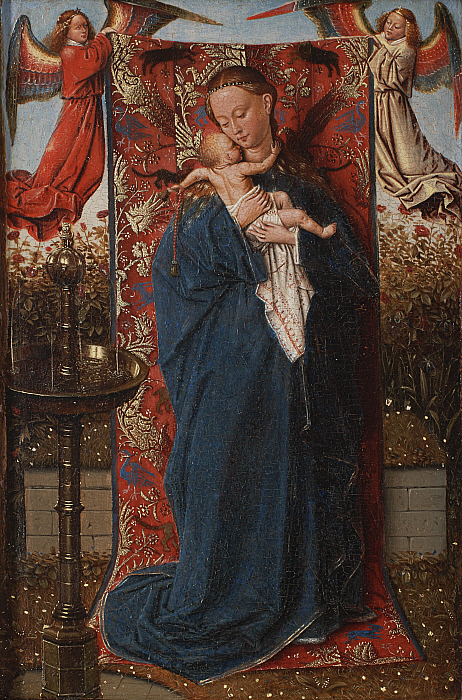
Standing before a brocaded cloth rendered in red, blue, and gold, the Virgin Mary tenderly embraces the Christ child. He reaches one arm around his mother’s neck, while the other holds a prayer-cord of red coral beads. Two heavenly angels, their wings multi-colored, flutter beside them. The carpet of lilies beneath the Virgin’s feet extends into an enclosed garden, filled with roses, behind her. Light reflects off the brass fountain in the foreground, capturing the smooth surface of the metal and highlighting the lion perched on top.
The Bruges artist Jan van Eyck ushered in a new form of devotional art in Europe in the first half of the fifteenth century, portraying the divine as part of our immediate and tangible world. His remarkable naturalism was achieved through the use of oil paint, which allowed for an unprecedented pictorial illusionism in color, light, and detail.
This work is a rare replica, or copy, made in Van Eyck’s workshop shortly before his death. Unlike the associations that exist today around copies—whether imitative or derivative—copies of religious images held an important role in the Catholic Church and may have been used for private devotion. Although the earliest provenance of this panel is not known, by the sixteenth century it was recorded in the inventories of Margaret of Austria, then ruler of the Netherlands.
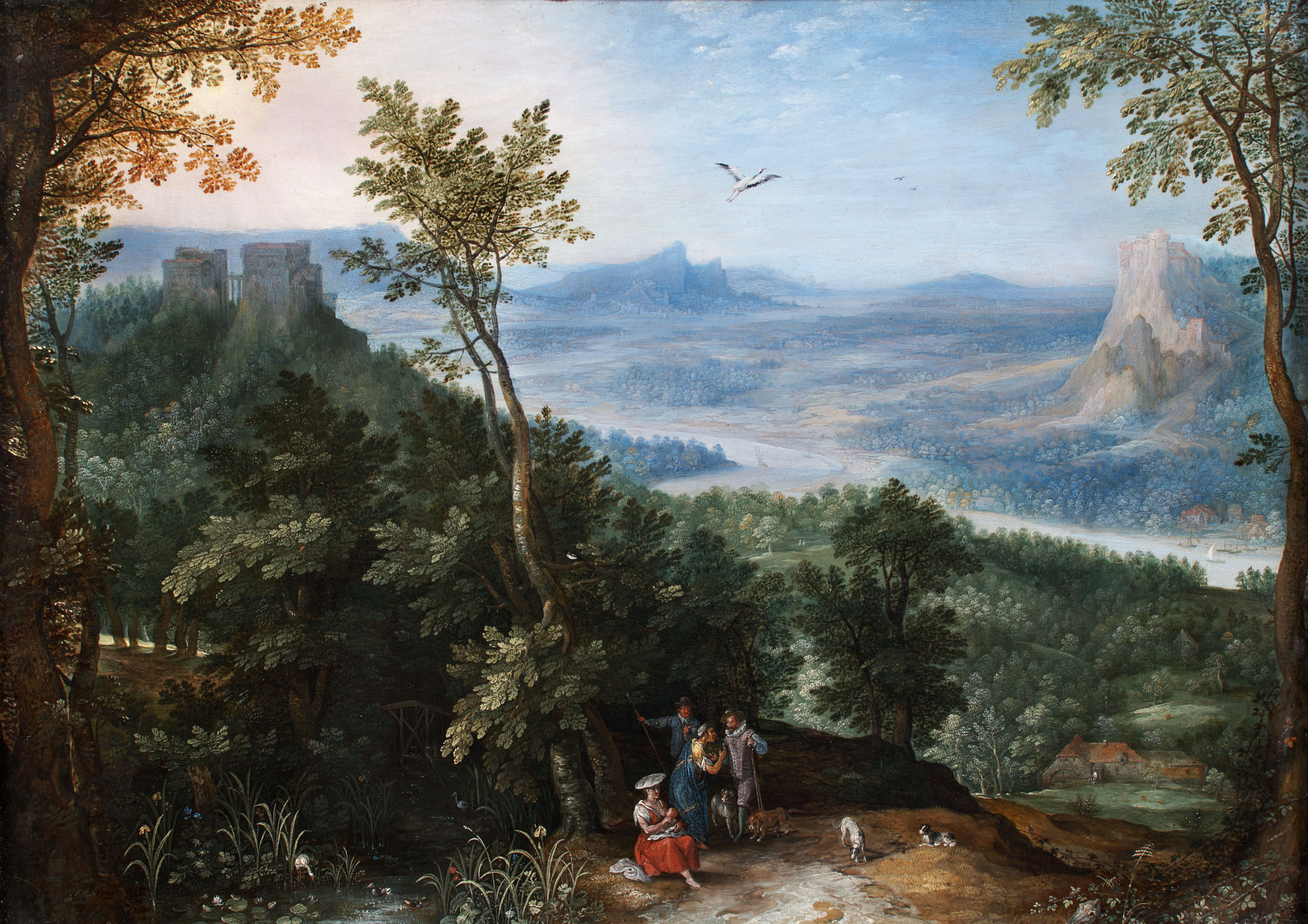
c. 1595, Oil on copper. The Clark, Gift of Aso O. Tavitian Foundation, 2025.1.24
Two female travelers, identified by their dress as Romani people, take a rest in the foreground of this dense forest landscape. Seated in a small clearing, the women encounter two men with their dogs, dressed elegantly indicating their elite social status. Behind them, a broad diagonal tree line opens onto a sweeping vista of the river valley below. This expansive landscape, in which Antwerp artist Jan Brueghel the Elder utilized a palette of greens and blues to suggest distance, contrasts with the minute detail with which he painted this scene, evident in the land’s twisting trees, individual leaves, and various wildlife.
Forest landscapes emerged from earlier local Flemish traditions, practiced by artists with whom Brueghel would have been familiar, including his father Pieter Brueghel the Elder. Here, Jan Brueghel created a natural landscape at an intimate scale meant to be held closely and admired by elite collectors. By the time he executed this work, around 1595, Brueghel had already spent five years traveling and working for prominent patrons in Naples, Rome, and Milan, including Cardinal Federico Borromeo. This painting, one of the artist’s earliest landscapes made shortly after his return to the Netherlands, reflects the maturity of his style at a pivotal moment in his career.
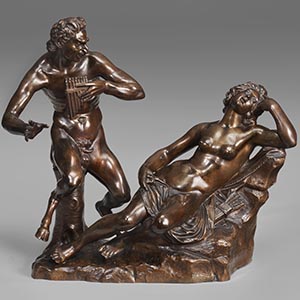
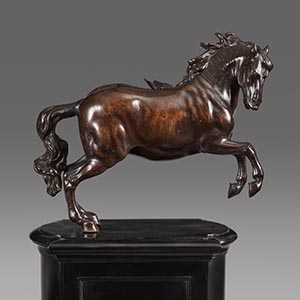
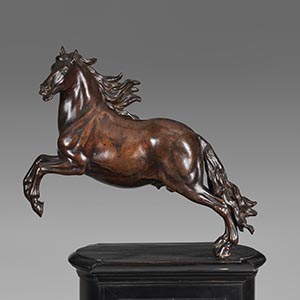
Ferdinando Tacca belonged to a line of sculptors that held the distinguished title of court sculptor to the Grand Dukes of Tuscany in Florence. With the workshop of his father, Pietro Tacca, Ferdinando produced both large- and small-scale bronze sculptures for the court patronage of the Medici family, achieving the highest levels of technical and artistic virtuosity in the bronze medium. These bronze statuettes demonstrate the range of Tacca’s inventions inspired by antiquity. In the mythological tale of Diana and Pan, drawn from Virgil’s Georgics (III, 391–393), the satyr Pan discovers Diana asleep, partially covered and wearing a diadem, or crown. He will soon seduce her with a gift of wool. Tacca’s two representations of rearing horses—a nod to the equestrian monuments of antiquity—show the animals with great dynamism. The acuity of the bronze casting can be seen in the careful articulation of the horses’ anatomy; tails and manes, flared nostrils, and smooth, well-formed bodies come alive before us.
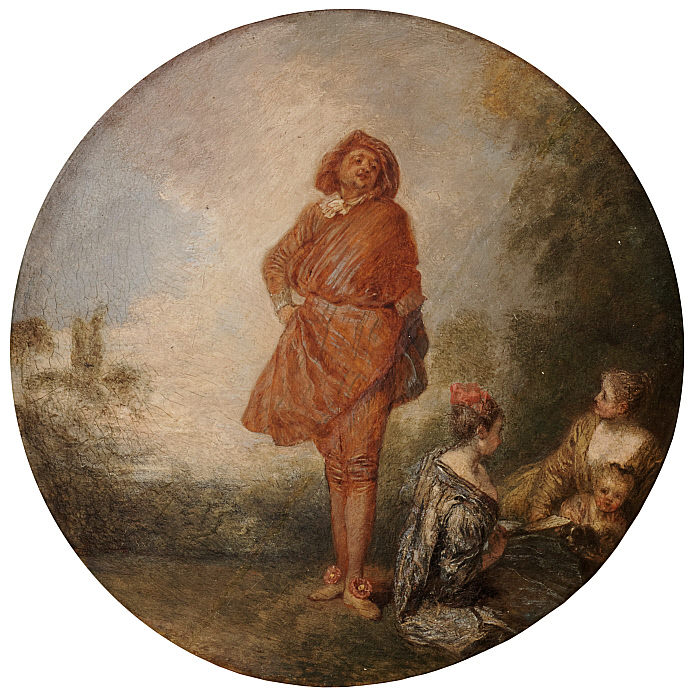
Jean-Antoine Watteau, an artist synonymous with the French Rococo, was a practitioner of a specific genre of painting known as the fête galante. Featuring men and women conversing, making music, or pursuing ludic pleasures in verdant countrysides, these paintings were highly coveted by eighteenth-century collectors throughout Europe. Here we are confronted by a man in theatrical costume who has stood up from his companions at lower right, including two women featured in profile and a young girl cradling a spaniel. When the painting was first reproduced in etching around 1728, it was given the title of L’Orgeuilleux, or, “The Proud Man,” seemingly because of the confident air relayed by the protagonist’s subtle smile and elbow akimbo.
This painting also has a remarkable provenance, as it is believed to be the first work by Watteau to enter the United Kingdom. The work was acquired by John Dalrymple, second Earl of Stair, during his time as envoy to the court of France in 1714. In Paris, Dalrymple befriended Philippe II, duc d’Orléans, one of Watteau’s most important patrons, and he possibly met the artist as part of this circle.
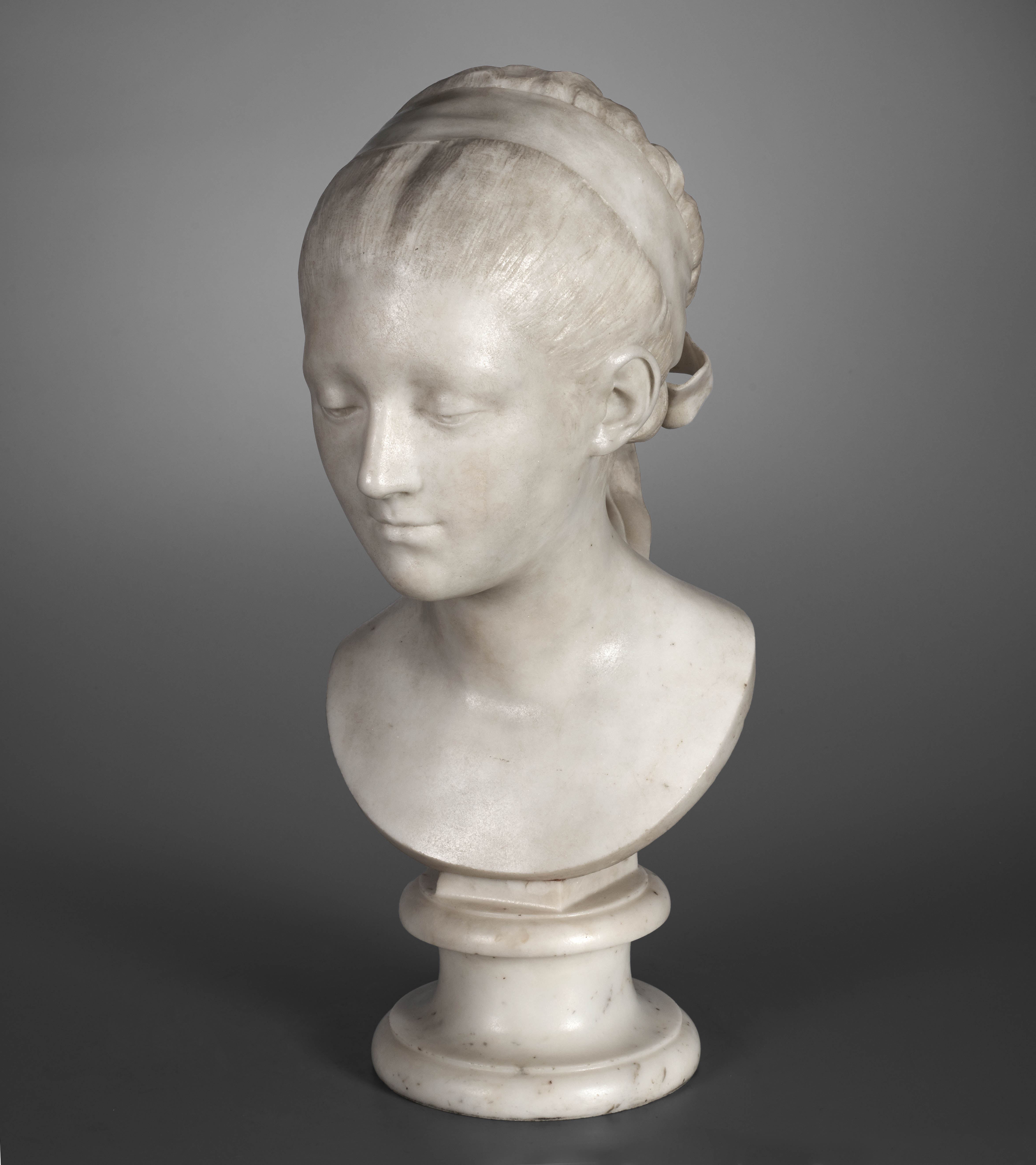
Jean-Antoine Houdon was one of the most sought-after portrait sculptors of the French Enlightenment. Philosophers, political figures, and the cultural elite—including Voltaire, Benjamin Franklin, and Napoléon Bonaparte, among others—vied for time in his studio. The sitter for this marble bust was a celebrity in her own right. Mademoiselle Lise, identified as Lise Noirin, took part in a grand festival hosted by the royal crown in 1774. To celebrate the marriage of the comte d’Artois, Louis XV’s grandson, the Parisian government sponsored the wedding of a number of young women from the provinces. Noirin was supposedly one of the participants. Upon learning of the event, Houdon invited her to pose for this portrait in which she was portrayed to symbolize innocence.
When he encountered this bust in Houdon’s studio, the prolific art critic and writer Louis de Bachaumont wrote: “We notice an indescribable something that could not be found in a hundred thousand faces.” In this carving, Houdon contrasts the sitter’s smooth, youthful skin with voluminous textured hair tied back by a wide ribbon.
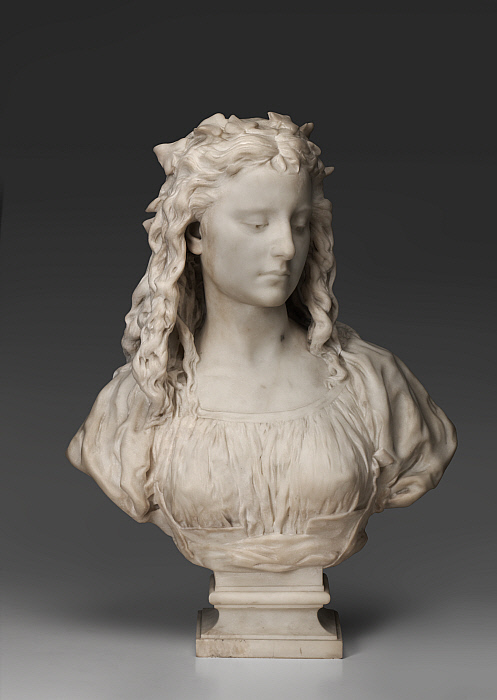
Hailing from Valenciennes in Northern France, Jean-Baptiste Carpeaux largely made his career in Paris and is perhaps best known for his work on the façade of the Opéra Garnier. While he received many public commissions throughout the Second Empire (1852–70), he also steadily produced portrait and head busts. This arresting marble sculpture features Amélie de Montfort, Carpeaux’s wife whom he had married five years prior. Her long tendrils of curled hair are incredible feats of carving, as is the delicately folded drapery. Carpeaux exhibited a plaster version of this work at the École des Beaux-Arts in 1894, and due to its success he executed five marble versions, including the present example.
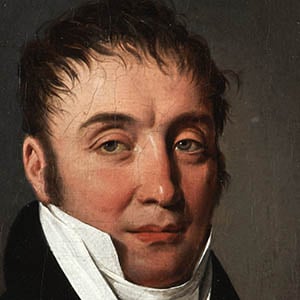
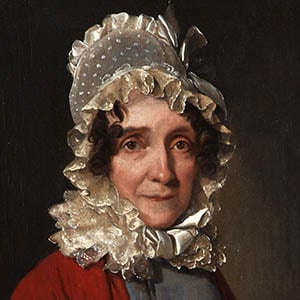
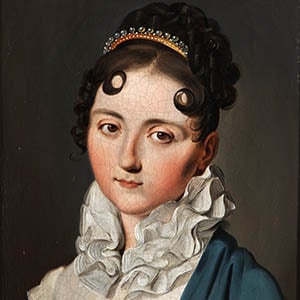
Louis-Léopold Boilly’s career thrived amidst the great political turmoil of the nineteenth century, from the fall of the French monarchy, through the French Revolution, the Napoleonic Empire, the Bourbon Restoration, and finally the July Monarchy. He was both a genre painter, specializing in scenes of French middle-class domestic life, and also a portraitist, as seen in this remarkable group of thirty-three paintings. In the 1820s, Boilly executed nearly five thousand small-scale portraits such as these. He typically completed the works in one or two sittings for an affordable price of 120 francs (roughly $360 in present day). In 1800 he formally launched this commercial venture when he displayed several examples in the Salon—the public exhibition open to all members of Parisian society—using the catalogue as a means to advertise them. He added a notice: “each one was made during a sitting of two hours.” His clients included members of aristocratic families, bankers, doctors, and writers among others. These men and women offer a fascinating window into the social order of the nineteenth century. While some of the sitters’ identities are known, many have been lost to history.
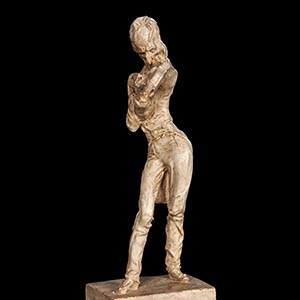
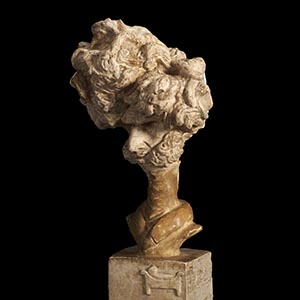
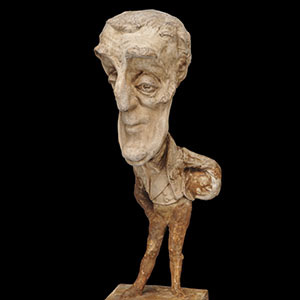
French sculptor Jean-Pierre Dantan captured the who’s who of Paris in the 1830s and 1840s with this group of thirty caricature portrait sculptures, known in French as charges. Rendered with an astonishing degree of boldness, wit, and sensitivity, Dantan transformed the emergent genre of caricature, more traditionally known through drawings, into expressive three-dimensional forms. He had an ability to distill his sitters’ identities into the most essential of traits. Most of the portraits represent cultural luminaries of the day, among them musicians, composers, singers, and playwrights. Famed musician Niccolò Paganini (1784–1840) for instance, energetically plays the violin, his thin, elongated body and large, double-jointed fingers moving elastically in space. Composer Louis-Hector Berlioz (1803–1869) is defined by his enormous mass of hair, long neck, and furrowed brow, an emblem of Romanticism.
The sculptures served as instruments of self-promotion for an elevated social milieu, displayed in shop windows in Paris and intended to be admired by passersby. The sculptures’ fragile plaster medium also composes their neo-Gothic plinths, which appear to be carved out of wood, a clever artistic illusion that conceals their actual material. The fact that this group of sculptures has remained intact for nearly two hundred years is likely owing to their acquisition by the Duke Maximilian of Bavaria from the artist’s studio in 1844.
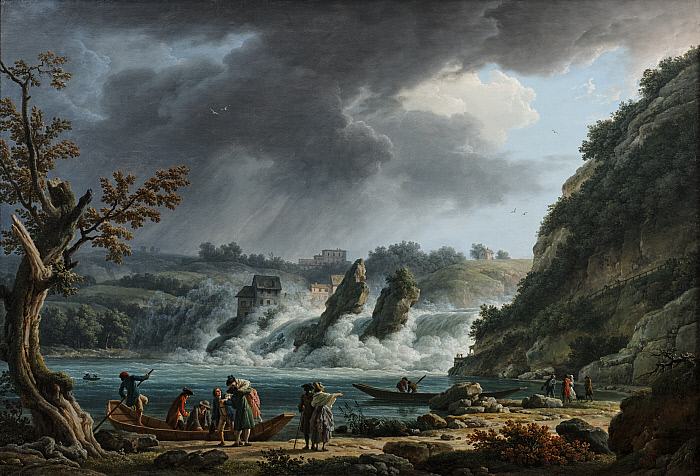
At the Académie royale de peinture et de sculpture (Royal Academy of Painting and Sculpture) in Paris—the preeminent training ground for French artists—students were instructed to specialize in a specific genre, or type, of painting. History painting was considered to be the most prestigious, because it necessitated the highest degree of education, and landscape painting was farther down the hierarchy. Claude-Joseph Vernet, who specialized in landscape, subverted this hierarchy as he imbued his paintings with heroic drama—earning the respect of his fellow academicians, critics, and the public alike. This painting was commissioned by Jean Giradot de Marigny, one of Vernet’s principal patrons who invited the artist on a tour of Switzerland in the summer of 1778. Inspired by the scenery on this trip, Vernet made about twenty drawings that he would later turn into large-scale canvases. This painting was one of a pair (the other now in a private collection) featuring views from opposite shores. The sublime spectacle of the Rhine Falls near Schaffahusen clearly fascinated Vernet and his contemporaries. A passage from Nouveau voyage en Suisse (New Voyage to Switzerland, 1798) by Helen Mary Williams, captures the wonder of this natural phenomenon and reflects that it was a site of international fascination:
“The entire river rushed across jagged rocks, several of which emerged out of the sea of foam; the howling of the waters, stopped in their impetuous fall, was a combination of various noises that had never before reached my ears; those undulating waves of water displayed this element in a totally new manner; that humid powder, which rose in clouds and reflected the colors of the rainbow before it evaporated into the air; never, no never, have I been able to forget these sensations.”